
Roland SP-404MKII Review – The Legendary Sampler Reborn
Categories : Drum Machines
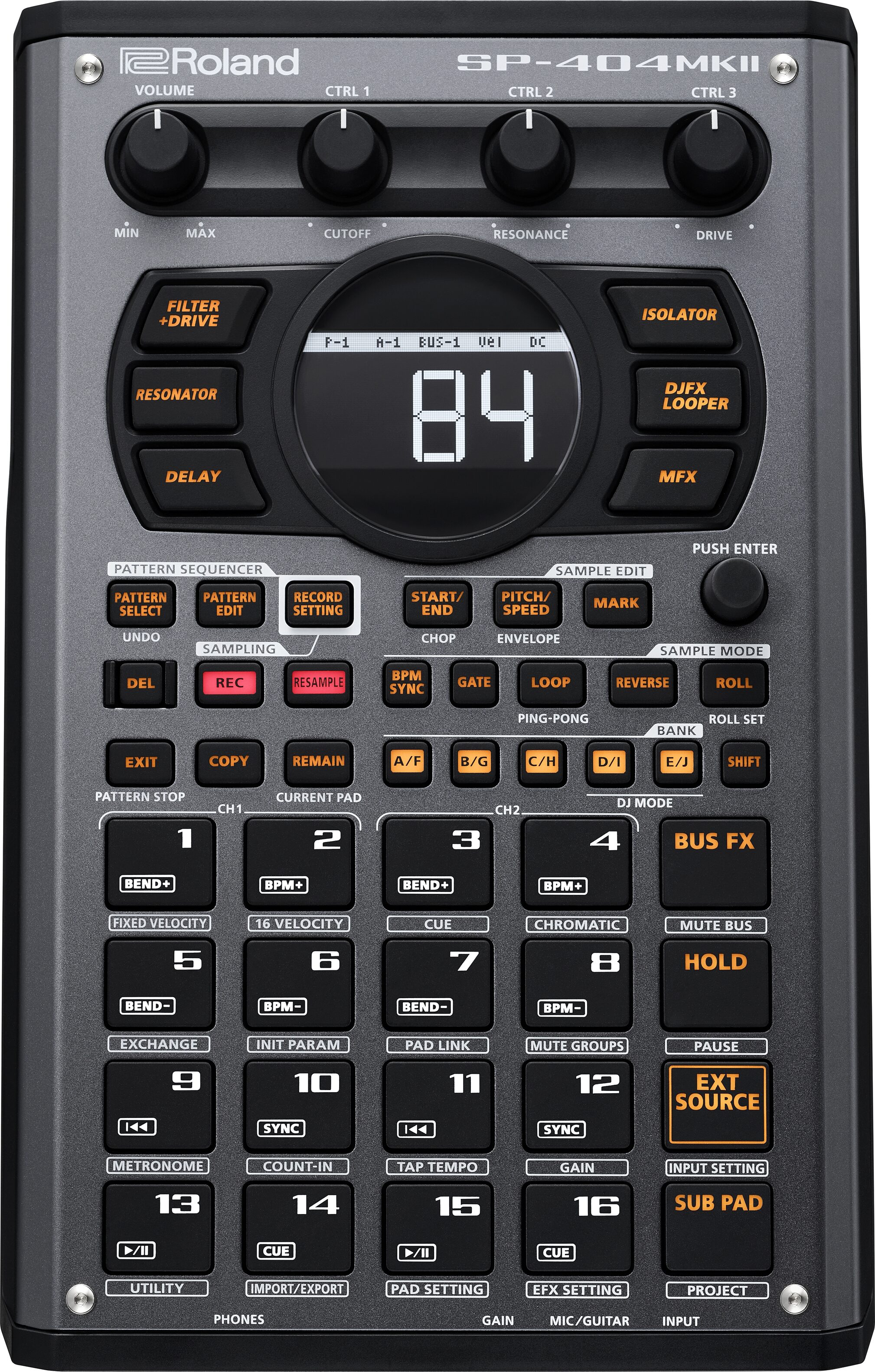
The Roland SP-404 series has always carried a certain mystique in the world of music production. From lo-fi hip-hop producers creating tape-warmed beats in their bedrooms to experimental electronic artists pushing boundaries on stage, the SP line carved out a reputation that few samplers can match. With the release of the Roland SP-404MKII, the company set out to honor that legacy while giving modern musicians the workflow, speed, and creative power they expect today.
So, does the MKII live up to the hype? Is it still the quirky cult classic we know and love, or has Roland transformed it into something completely different? After spending extended time digging into the machine, here’s everything you need to know: design, workflow, sound quality, effects, performance, pros, cons, and whether it’s worth your money in 2025.
First Impressions and Build Quality
The Roland SP-404MKII strikes a balance between nostalgia and modernity. It retains the familiar rectangular body with 16 velocity-sensitive pads, a compact form factor, and that instantly recognizable layout. But once you place it side by side with the original SP-404 or even the SX and A models, the differences are clear.
The most striking addition is the OLED screen, a much-requested upgrade that immediately makes navigation smoother. Previous SP users will remember the tiny character displays that forced you to memorize cryptic abbreviations. The new screen changes everything—it displays waveforms, menus, and project information in a way that feels intuitive without sacrificing the SP’s raw, hands-on vibe.
Build quality is solid but portable. At just under 3 pounds, the MKII is light enough to throw in a backpack yet sturdy enough to survive live sets. The metal faceplate feels durable, the knobs are responsive with minimal wobble, and the pads—though smaller than those on some competing samplers—are satisfyingly sensitive. It feels like a true performance instrument rather than a studio toy.
Workflow and User Interface
One of the biggest criticisms of older SP models was their menu-diving. While the minimalist design was part of the charm, it also slowed down workflow. Roland listened to years of user feedback, and the MKII solves many of these issues.
The improved screen means you can finally see your sample waveforms, trim points, and effects parameters clearly. Assigning samples to pads is straightforward, chopping is faster, and editing feels less like guesswork.
Another massive workflow improvement is the project system. The SP-404MKII allows up to 16 projects, each holding 160 samples. That’s 2560 samples in total—far beyond the limitations of the older machines. Switching between projects is nearly instantaneous, which is a game-changer for live performers who want to move seamlessly between sets without long load times.
Roland also expanded the pattern sequencer. You can now record with quantization or free-time input, adjust swing, and use step-sequencing for precise editing. While it’s not as deep as a full DAW or groovebox, it strikes the right balance for beatmakers who want immediacy without being bogged down by complexity.
Sampling and Sound Quality
The SP-404’s identity has always been tied to its unique sampling character. Some producers fell in love with the crunchy, lo-fi sound of the original units, while others wished for more fidelity. The MKII manages to please both camps.
It records and plays back in 32-bit float audio, ensuring pristine sound quality for those who want clarity. Samples retain punch and detail whether recorded through line inputs, the built-in mic, or imported via SD card/USB. At the same time, Roland included tools to degrade the sound when desired—vinyl sim, bit reduction, and filtering effects ensure you can still achieve that classic SP grit.
Sample editing is a revelation compared to past models. The start and end point editing is much faster thanks to the waveform display. Chopping can be done manually or automatically, and resampling—still one of the SP’s most powerful features—is quicker and more fun than ever.
Storage is no longer a limitation. With 16 GB internal memory and SD card expansion, you can load hours of material. That’s a huge step up from juggling tiny cards on the older SPs.
The Effects Engine
If there’s one thing the SP series is famous for, it’s the effects. From the DJFX Looper that defined entire genres of beat scene performance to the vinyl simulator that added warmth to countless lo-fi tracks, the SP’s FX are legendary.
The MKII doubles down with 37 effects, ranging from bread-and-butter reverbs and delays to wild glitch processors and modern additions. Some highlights:
- Vinyl Simulator – Warms samples with crackle, pitch warble, and compression.
- Lo-fi FX – Bit crusher, sample rate reduction, and distortion for dirty textures.
- DJFX Looper – Iconic stutter effect that remains essential for live manipulation.
- Isolator and EQs – Shape your mix on the fly.
- Cassette Simulator – New effect that emulates tape saturation and wow/flutter.
- Guitar Amp Sims – Great for running instruments or vocals through.
The MKII also introduces multi-FX chaining, allowing you to run several effects simultaneously. This transforms the SP into not just a sampler, but also a serious performance effects unit for external gear.
Performance and Live Use
The SP-404 has always been at home on stage, but the MKII elevates that role. The velocity-sensitive pads are more expressive, letting finger drummers play dynamically rather than triggering everything at one volume. Pad banks can be switched instantly, giving access to hundreds of sounds in a single performance.
The resampling workflow shines in live contexts. You can capture a pattern with effects baked in, then immediately layer more sounds on top. It’s like live sound design happening in real time. Add in the DJFX Looper, and performances can become wild improvisations.
The Skip Back Sampling feature is another game-changer. At any moment, the MKII is recording the last 25 seconds of audio. If you accidentally create a magical moment during a jam, you can hit a button and capture it retroactively. This encourages risk-taking on stage because nothing is ever truly lost.
Connectivity is strong for both live and studio contexts. The MKII includes stereo line inputs/outputs, MIDI I/O, and USB-C for audio interface functionality. Yes, you can use it as a USB audio interface with your computer or iPad, which integrates nicely with DAWs.
Creative Potential
The SP-404MKII isn’t just about technical features—it’s about workflow philosophy. It encourages experimentation, imperfection, and spontaneity. Unlike DAWs that invite endless tweaking, the SP thrives on committing ideas quickly through resampling and effects.
This is why it resonates so deeply with lo-fi producers and experimental artists. You’re not polishing a track to perfection—you’re creating textures, moods, and moments. The MKII strengthens this identity while removing frustrations that once held it back.
For those who want polished productions, the cleaner audio engine and USB connectivity ensure it integrates into a professional setup. For those who want grime and grit, the effects and resampling keep the spirit alive.
Comparison Table: Roland SP-404MKII vs Competitors
| Feature | Roland SP-404MKII | Akai MPC One+ | NI Maschine+ |
|---|---|---|---|
| Pads | 16 velocity-sensitive pads | 16 RGB velocity pads | 16 large RGB velocity pads |
| Screen | OLED display with waveform view | 7” full-color touch screen | 4.3” color display (non-touch) |
| Storage | 16 GB internal + SD card | 32 GB internal + SD card | 64 GB internal + SD card |
| Effects | 37 FX (Vinyl Sim, Lo-fi, DJFX Looper) | 90+ FX + Air FX plugins | 35+ FX + NI plugin library |
| Audio Quality | 32-bit float / 48 kHz | 32-bit / 44.1 kHz | 24-bit / 44.1 kHz |
| Sequencer | Pattern-based, resampling workflow | Full DAW-style sequencer | Step sequencer + clip-based |
| Connectivity | USB-C, MIDI I/O, stereo in/out | USB, MIDI, CV/Gate, audio in/out | USB, MIDI, audio in/out |
| Portability | Very compact, ~3 lbs | Compact but heavier, ~5 lbs | Larger, ~6 lbs |
| Price (approx.) | $500–600 | $700–800 | $1200+ |
Pros
- Massive workflow improvements over past SP models.
- OLED screen makes navigation and editing clear.
- High-quality 32-bit float audio plus lo-fi tools.
- 37 effects including classics and new additions.
- Skip Back Sampling for instant idea capture.
- USB audio interface integration with DAWs.
- Huge storage with project system and SD expansion.
- Compact and portable, built for live use.
Cons
- Learning curve remains steep for complete beginners.
- Sequencer is still limited compared to full grooveboxes like the Akai MPC series.
- Pad size may feel small for heavy finger drummers.
- No battery option—requires external power (though can run on USB power banks).
- Price point is higher than entry-level samplers, though justified by features.
Who Is It For?
The Roland SP-404MKII is ideal for:
- Lo-fi hip-hop and beat scene producers who want the classic SP character with modern convenience.
- Live performers who value immediacy, effects, and improvisation.
- Experimental electronic artists looking for a portable sound-design tool.
- DAW producers who want a hands-on sampler and performance unit to complement their software.
It may not be perfect for producers who need deep sequencing, heavy multi-track recording, or who prefer a polished, linear workflow. In those cases, an Akai MPC One+ or software sampler might be a better fit.
Verdict
The Roland SP-404MKII is a triumph. It preserves everything that made the SP series special—its raw, performance-driven soul—while addressing nearly every complaint long-time users had. With its improved screen, cleaner audio, expanded effects, and thoughtful workflow enhancements, it feels like the sampler we always wanted the SP-404 to be.
For $500–600, it’s not the cheapest sampler on the market, but it is one of the most inspiring. The MKII doesn’t try to compete directly with workstation-style samplers. Instead, it doubles down on its identity as a creative instrument—fast, intuitive, and fun.
If you’re looking for a machine that encourages experimentation, makes live performance thrilling, and gives your beats character, the SP-404MKII is one of the best investments you can make.
Final Thoughts
Gear comes and goes, but few instruments achieve true cult status. The SP-404 series did, and the MKII ensures that legacy continues into a new generation. It’s rare for a company to refine a classic without stripping away what made it unique, but Roland pulled it off.
Whether you’re chopping jazz samples into lo-fi loops, building glitchy electronic textures, or improvising with effects on stage, the SP-404MKII gives you the tools to create with freedom. It’s not about perfection—it’s about vibe. And in that respect, Roland absolutely nailed it.
Reviews and Articles
Explore our in-depth review of the Teenage Engineering PO-33 K.O.! Pocket Operator. Discover its features, sound performance, and ideal use-cases.
Explore our in-depth review of the Alesis SR-18 Studio Drum Machine and ASP-1 MKII Sustain Pedal Bundle, focusing on build quality, features, performance, and ideal use cases.
Discover the features, performance, and pros and cons of the Boss DR-3 Dr. Rhythm drum machine in our comprehensive review. Ideal for beginners and portable for live gigs.
Discover our in-depth review of the BeatBuddy 10th Anniversary Edition drum machine. Explore its build, features, performance, and who it's best suited for.
Discover the Teenage Engineering OP–XY, a portable synthesizer with a sequencer, sampler, and built-in features. Read our in-depth review.
Related Products :


