
Best Wireless Microphones for Creators in 2025: DJI Mic Mini vs Hollyland Lark A1 vs Hollyland Lark M2
Categories : Microphones and Accessories
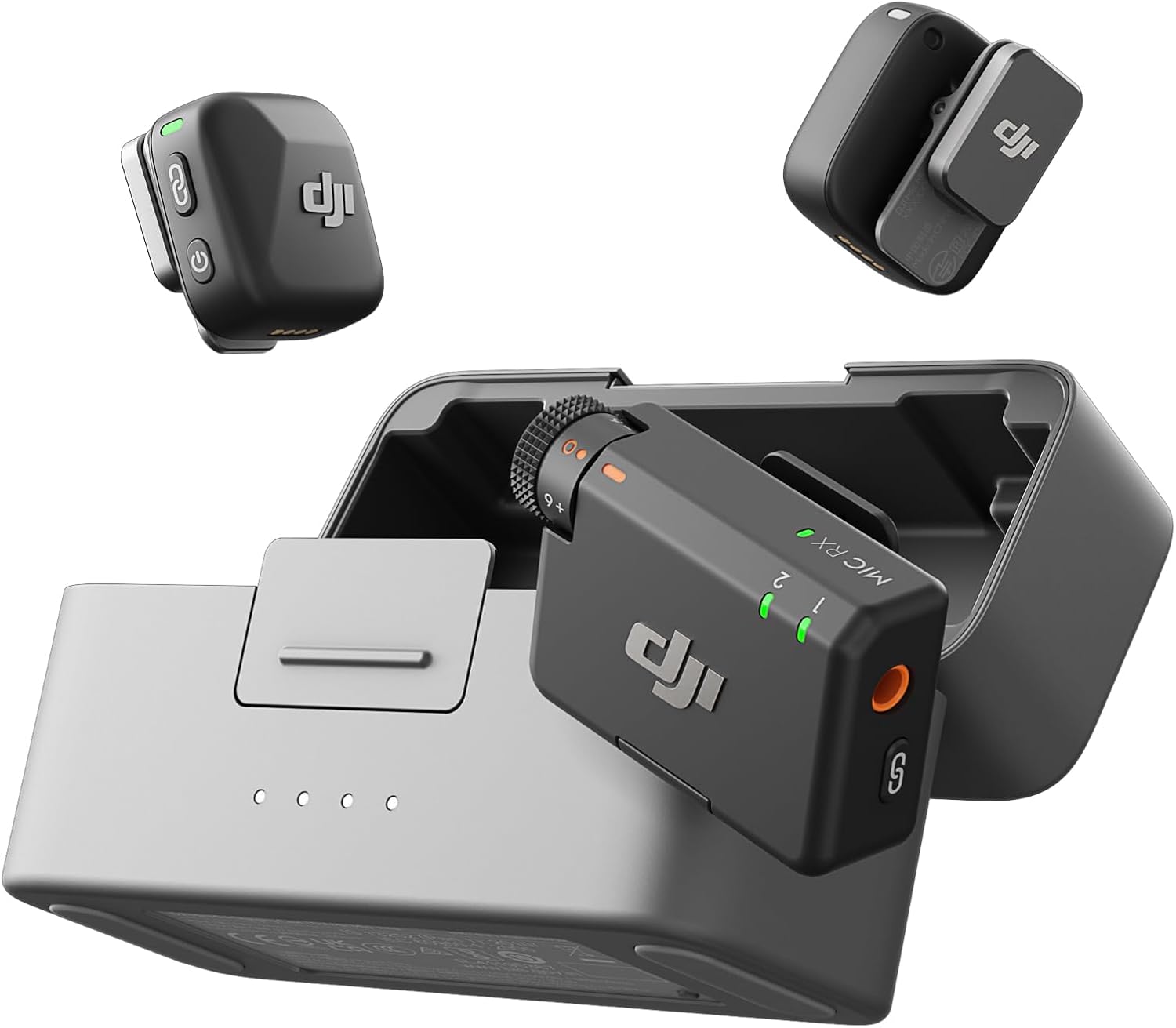
If you shoot YouTube videos, TikToks, Reels, podcasts-on-the-go, interviews, weddings, or client work, your audio quality can make or break the final edit. Built-in camera and phone mics pick up room echo, wind, and handling noise. A compact wireless microphone kit solves all of that by placing a high-quality mic near the speaker’s mouth and transmitting a clean signal to your camera or phone. In this long-form comparison, we put three of the most creator-friendly systems head-to-head: DJI Mic Mini, Hollyland Lark A1, and Hollyland Lark M2. You’ll learn how they differ, who each is best for, and which one offers the best value for your workflow.
What to expect below: a quick-glance comparison table, detailed hands-on style analysis of each kit (sound, build, pairing, battery, ecosystem, accessories), real-world use cases, pros & cons, and a buying decision matrix to help you pick confidently.
Quick Comparison Table
| Feature | DJI Mic Mini | Hollyland Lark A1 | Hollyland Lark M2 |
|---|---|---|---|
| Form Factor | Ultra-compact TX/RX; pocket-friendly | Minimalist dual-TX kit; simple charging case | Clip-on “coin” style TX; feather-light |
| Transmitter Mics | Integrated mic on each TX; lav support via input | Integrated mic; lav support on compatible bundles | Integrated mic; extremely discreet footprint |
| Receiver Outputs | Camera (3.5mm) + mobile adapters (bundle dependent) | Camera (3.5mm) + smartphone options | Camera (3.5mm) + phone adapters; creator-centric mounts |
| On-board Controls | Intuitive; gain, pairing, safety track (model/firmware dependent) | Very simple; creator-friendly auto levels | Simple; focus on set-and-forget usability |
| Noise Handling | Strong windshields; digital noise handling | Good wind control; reliable speech clarity | Impressive for size; tuned for speech intelligibility |
| Battery Life | All-day creator use with charging case | All-day casual/prosumer sessions | Excellent endurance vs weight |
| Range (Line-of-Sight) | Solid creator-grade distance outdoors | Reliable typical YouTuber distances | Competitive LOS range for run-and-gun |
| Monitoring | Camera/phone monitoring via receiver | Camera/phone monitoring via receiver | Camera/phone monitoring via receiver |
| Best For | Hybrid creators who need polish + compactness | Budget-friendly dual-person interviews | Ultra-light travel, stealth vlogging, lifestyle content |
| Value | Premium feel in a tiny kit | Excellent price-to-performance | Top portability with strong audio |
Why Wireless Mics Matter More Than You Think
Viewers will forgive a shaky handheld shot; they will not forgive muffled, windy, or distorting audio. A dedicated wireless system puts the microphone right where it belongs—at chest or collar level—so your voice is clear, consistent, and direct. That proximity dramatically reduces room echo and background noise. Modern 2.4 GHz digital links keep latency low and pairing easy, and charging cases make battery anxiety a thing of the past. The three kits in this guide embrace those principles while focusing on convenience for creators who film on phones and mirrorless cameras alike.
How We’re Comparing
- Audio Quality: tonal balance, noise floor, handling of plosives and sibilance, and performance in noisy spaces.
- Ease of Use: pairing, level control, safety tracks, screen/readability (if present), and “just works” factor.
- Build & Ergonomics: weight, clip strength, magnet options, case robustness, and transmitter footprint on clothing.
- Battery & Range: practical, real-world endurance and consistent line-of-sight reliability indoors/outdoors.
- Platform Flexibility: camera vs phone, included adapters, and future-proofing for hybrid creators.
- Value: what you get for the money in a creator context.
1) DJI Mic Mini — Tiny Footprint, Polished Experience
DJI distilled its experience building creator-grade accessories into a pocketable wireless kit aimed at minimal fuss and maximum portability. The DJI Mic Mini embraces the “throw it in your bag and forget it” philosophy: transmitters and receiver live in a compact charging case, pairing is near-instant, and the UX feels refined and predictable. If you’ve ever lost time fiddling with gain staging or re-pairing wireless mics on set, you’ll appreciate how streamlined it feels.
Sound Quality
The on-board capsules are tuned for speech intelligibility—present mids for clarity, restrained lows to avoid chest boom, and controlled highs to keep sibilance in check. Windshields do a good job curbing gusts; proximity placement keeps room echo down. You can plug in lavaliers if you want a lower-profile look or tighter isolation. For solo talking-head pieces and interviews, noise floor and RF stability are competitive in this size class.
Ease of Use & Controls
Set-and-forget is the vibe. Pairing is seamless out of the case. Gain nudges are intuitive, and safety-track style workflows (when supported by model/firmware) add peace of mind against sudden laughs or shouts. The receiver’s readouts (where present) are readable in daylight and the buttons feel positive. If you often hand gear to collaborators or clients, this “just works” factor is gold.
Build & Ergonomics
Everything feels compact and travel-ready. Clips hold well to shirts and camera straps; the case fits a jacket pocket. The transmitters are small enough to look neat on clothing, and the accessory ecosystem (magnets, windscreens, adapters) caters to real-world creator needs.
Battery & Range
Practical endurance is strong thanks to the charging case. You can easily get through typical day-in-the-life vlogging, a short documentary segment, or a wedding highlight session with top-ups between takes. Line-of-sight range is robust for creator distances—walk-and-talks, street interviews, and event coverage.
Who It’s Best For
If you want a premium-feeling system that stays small without sacrificing polish, the DJI Mic Mini is a standout. Hybrid shooters bouncing between phone and mirrorless will appreciate the accessories and overall refinement.
Pros
- Refined UX; effortless pairing and gain control
- Compact charging case; pocketable system
- Clean, intelligible voice tone with good wind handling
- Strong accessory/adapter ecosystem
Cons
- Premium pricing versus entry-level kits
- Power users may outgrow minimal screen/controls depending on bundle
2) Hollyland Lark A1 — Budget-Friendly, Reliable, Creator-Ready
Hollyland’s Lark A1 made waves for offering a dual-transmitter kit with a straightforward charging case at a very approachable price. It leans into simplicity: minimal menu diving, fast pairing, and a sound signature optimized for speech clarity. For two-person interviews, street vox pops, and fast content capture, it’s an easy recommendation when you want dependable wireless without spending big.
Sound Quality
Speech sits forward in the mix, which helps in noisy locations. Sibilance is kept reasonable; lows are tight enough not to smear dialogue. Plosive handling is solid with windscreens on. It’s the kind of sound that slots straight into timelines without heavy EQ.
Ease of Use & Controls
The A1 embraces a “no manual needed” design. Out of the case, it pairs quickly and you’re recording. Levels are easy to set, and auto-mode options help prevent clipping if your on-camera talent gets animated. This is the kit you lend to a friend, and they nail it on the first try.
Build & Ergonomics
The plastics feel durable for the price; the case protects and charges everything. Clips grip securely to tees and jackets; transmitters are discreet enough for lifestyle content and event coverage. The receiver mounts cleanly on a camera shoe or phone rig.
Battery & Range
Expect “shoot all afternoon” practicality with case top-ups. For vlog distances and typical interview spacing, dropouts are rare. Indoors, the link holds well even with occasional line-of-sight obstructions.
Who It’s Best For
The Lark A1 is ideal for creators who want dual-person capability, simple operation, and dependable results without stretching the budget. Think YouTubers, educators, church media teams, and solo filmmakers who occasionally run two mics.
Pros
- Outstanding value for a dual-TX kit
- Beginner-friendly operation
- Solid voice clarity with minimal post work
- Charging case reduces battery anxiety
Cons
- Fewer pro-leaning controls or displays
- Accessory depth not as extensive as pricier kits
3) Hollyland Lark M2 — Ultra-Light, Ultra-Discreet, Travel-First
Hollyland’s Lark M2 pushes portability even further with coin-like transmitters that nearly disappear on clothing. If you film travel reels, lifestyle content, “day in the life” vlogs, or you simply want your mic to vanish on camera, the M2 nails the stealth brief without compromising creator-grade audio.
Sound Quality
For such a tiny transmitter, the M2’s voicing is impressively balanced for speech. Upper mids give definition, while the low end avoids boom. With proper placement and windscreens, outdoor intelligibility is strong. It’s tuned to work well right out of the box—perfect for fast social content.
Ease of Use & Controls
The M2 keeps the control surface minimal so you can focus on content, not menus. Pairing is quick; levels are easily managed; mounting options are creator-friendly. It’s designed to be “grab and go” whether you’re shooting with a phone gimbal or a compact mirrorless body.
Build & Ergonomics
The defining trait is the transmitter’s feather-light form factor. Clips and magnets make placement simple on tees, dresses, or jackets. Because the units are so small, clothing drape looks cleaner on camera—great when you want the audience to forget a mic is even there.
Battery & Range
Battery life is competitive given the weight, and the case top-ups keep you rolling through a full day of intermittent shooting. For walk-and-talks and travel diary distances, range is reliable and predictable.
Who It’s Best For
Travelers, daily vloggers, lifestyle and fashion creators, and anyone who prioritizes a low-profile, ultra-light setup. If you’re often filming yourself at arm’s length or doing quick run-and-gun shoots in busy locations, the M2’s stealthy form factor is a dream.
Pros
- Extremely compact, discreet transmitters
- Creator-tuned speech clarity out of the box
- Easy mounting with magnets/clips
- Travel-friendly charging case
Cons
- Fewer “pro” adjustments than larger systems
- Small size means small physical controls
Head-to-Head: Which Sounds Best?
All three aim for clean, conversational dialogue with a forward midrange that helps voices cut through ambient noise. In subjective listening:
- DJI Mic Mini delivers the most “polished” default voicing: articulate mids, restrained highs, and a slightly more premium sense of space. It feels purpose-built for creators who want broadcast-leaning results without an EQ session.
- Lark A1 emphasizes intelligibility and consistency, which is fantastic for dual-person setups and street interviews where you can’t control the environment.
- Lark M2 punches above its size in clarity and noise control, particularly appealing when you value stealth and speed over deep tweaking.
If you expect lots of shouting, laughter, or surprise peaks, look for safety-track workflows or conservative gain. If you plan to mic guests with variable mic technique, the A1’s straightforward operation is a real advantage. For solo creators who want that “finished” sound with minimal effort, DJI’s tuning wins.
Pairing & Reliability
All three are designed for immediate pairing out of the case. Modern 2.4 GHz links handle most creator scenarios. The main practical differences are UX polish and how quickly the system recovers from temporary obstructions:
- DJI Mic Mini: exemplary ease of pairing and recovery; feels mature and predictable.
- Lark A1: designed for simplicity, recovering gracefully in typical creator distances.
- Lark M2: quick set-and-forget; the stealth form factor doesn’t compromise link stability in common use.
Battery Life, Charging & Range
Charging cases are the secret sauce: you’ll top up in transit or between takes and keep rolling all day. For most creators:
- DJI Mic Mini: excellent case-assisted endurance; ideal for wedding days and docu-style shoots with breaks.
- Lark A1: very good real-world uptime; great for afternoon interview blocks.
- Lark M2: impressively long for such lightweight units; optimal for travel days and city content walks.
Line-of-sight range is more than enough for vlogging, interviews, and walk-and-talks. As always, walls, crowds, and RF-heavy venues can reduce range; clipping your TX on the outer garment (not buried under layers) helps.
Build, Mounting & Discretion
Creators care about how visible the mic is. Here’s how they compare:
- DJI Mic Mini: tidy, modern look with solid clips and magnet options; disappears reasonably well on camera.
- Lark A1: compact, practical design that reads “creator tool” without drawing attention.
- Lark M2: the stealth champ—its coin-like TX practically vanishes on clothing.
If you shoot fashion, lifestyle, or brand work where wardrobe visuals matter, the M2’s minimal profile is a big win. For corporate or event gigs, DJI’s premium finish adds client-friendly polish.
Camera vs. Smartphone Workflows
All three kits support cameras (3.5 mm TRS) and can be adapted for smartphones (Lightning/USB-C options vary by bundle). Consider your main rig:
- Primarily smartphone: Look for receiver mounts that don’t crowd your gimbal. The Lark M2’s featherweight approach is perfect for mobile rigs; DJI’s adapters and ergonomics are also excellent.
- Primarily camera: All three sit neatly in the camera shoe; DJI offers a particularly clean on-camera experience with clear visual feedback.
- Hybrid shooters: DJI’s accessory ecosystem makes frequent rig swaps painless; Hollyland’s kits are also straightforward with the right adapters.
Use Cases & Real-World Scenarios
Solo YouTuber / Course Creator
You need reliable, flattering voice capture with minimal setup. The DJI Mic Mini is the most “finished” sounding for talking-heads and tutorials, while the Lark A1 gives fantastic results at a lower price. If you’re constantly filming on the go, the Lark M2’s stealth is unmatched.
Two-Person Interviews & Podcasts-on-the-Go
Dual transmitters are the priority. The Lark A1 shines here because it’s affordable, simple, and consistent. DJI also does a great job if you want a more premium feel and potentially more nuanced control.
Weddings & Events
Endurance and set-and-forget reliability matter. DJI’s case-assisted battery and polished UX are ideal. Lark A1 is a great budget alternative for ceremony audio, toasts, and quick interviews. M2 works well for stealthy mic placement on attire.
Travel & Lifestyle Vlogging
Weight and visibility are everything. Lark M2’s coin-style TX disappears on clothing and won’t weigh down gimbals. DJI remains excellent if you want extra polish; A1 keeps costs in check while covering most needs.
Short-Form Social (TikTok, Reels, Shorts)
All three will instantly boost your production value. The M2’s minimal footprint is great for fashion/beauty creators; DJI’s refined sound adds a broadcast sheen; A1 gives predictable results on a budget.
Accessories & Ecosystem Considerations
- Windscreens/Deadcats: Essential for outdoor creators. All three support easy windshield swaps.
- Magnets & Clips: Magnets are game-changing for thin fabrics; the M2 and DJI both offer excellent magnet options.
- Lavaliers: If you want a barely visible setup with even more clothing isolation, add lavs. DJI and A1 bundles commonly support lav inputs; M2 remains discrete even with its on-board mic.
- Cables & Adapters: Keep TRS/TRRS and phone adapters in the case so you’re always ready to plug into any rig.
Troubleshooting & Best Practices
- Gain Staging: Set TX gain conservatively; add headroom for laughs and emphasis. Use safety-style workflows when available.
- Placement: Clip the mic 6–8 inches below the mouth, outside the clothing layer. Avoid necklaces rubbing on the capsule.
- Wind & Clothing Noise: Always use windscreens outdoors. For silky takes, consider a small lav under fabric with a tape loop to decouple rustle.
- RF Management: Keep TX outside of pockets and away from dense electronics. Maintain reasonable line-of-sight for longer distances.
- Battery Rotation: Top up during lens changes or scene resets. The case is your best friend.
Value for Money
All three kits deliver strong value in their lanes. The Lark A1 often undercuts competitors while providing dual-person capability and solid sound. The Lark M2 adds meaningful stealth and travel advantages without a big price penalty. DJI Mic Mini costs more but rewards you with a polished experience that shines on client work and consistent content schedules.
Environmental & Editing Considerations
No mic fixes a terrible room, but a good wireless system minimizes the damage. If your space is echoey, add soft furnishings, blankets, or acoustic panels behind the camera. In the edit, gentle high-pass filtering, a touch of de-essing, and noise reduction (if needed) can take these mics from “good” to “broadcast ready.” Recording at healthy but not hot levels gives plugins more room to work without artifacts.
Buying Guide: Choose Your Winner
Pick the DJI Mic Mini if you:
- Want the most refined out-of-the-box sound and UX
- Switch often between camera and smartphone and want accessories that make it painless
- Do client work or brand deals and value a premium look/feel
Pick the Hollyland Lark A1 if you:
- Need a dependable, straightforward dual-TX kit at a friendly price
- Record lots of interviews or two-person shoots where simplicity rules
- Want consistent, edit-ready dialogue without fuss
Pick the Hollyland Lark M2 if you:
- Prioritize stealth, weight, and comfort for travel or fashion/lifestyle
- Film yourself frequently at arm’s length on a phone/gimbal
- Want the least visually intrusive mic that still sounds creator-grade
Side-by-Side Verdicts
- Best Overall Experience: DJI Mic Mini — polished sound + premium UX in a tiny kit.
- Best Value (Dual-Person): Hollyland Lark A1 — two transmitters, simple operation, wallet-friendly.
- Best for Travel & Stealth: Hollyland Lark M2 — feather-light, discreet, and creator-tuned.
Frequently Asked Questions
Do I need lavalier mics, or are the built-in transmitters enough?
The built-in mics on all three kits are excellent for social content and general interviews. Lavalier mics can further reduce clothing rustle and visual profile. If you do formal interviews or corporate work, keeping a pair of lavs in your kit is smart.
How do I get clean audio outdoors?
Use the included windscreens, place the mic outside clothing layers, and angle it slightly off-axis from the mouth to reduce plosives. Set conservative gain and enable a safety-style workflow if available.
Will these work with my phone and my camera?
Yes. All three support cameras via 3.5 mm and offer bundles/adapters for phones. Check whether you need Lightning or USB-C and choose the kit version that includes the right dongles.
What about range and dropouts at events?
For typical creator distances, any of the three will be fine. Maintain line-of-sight where possible, avoid burying the transmitter under thick layers, and keep the receiver clear of dense metal or RF sources.
Can I monitor audio in real time?
You’ll monitor through your camera or phone. For critical shoots, always wear headphones during a test clip to confirm levels and noise before rolling.
Final Thoughts
Wireless audio is one of the biggest quality-of-life upgrades in modern content creation. The DJI Mic Mini, Hollyland Lark A1, and Hollyland Lark M2 each deliver creator-grade sound with unique strengths:
- DJI Mic Mini brings premium polish, effortless UX, and robust accessory support in a compact form.
- Hollyland Lark A1 nails the essentials for dual-person content at a price that’s hard to beat.
- Hollyland Lark M2 stands out for stealth and comfort—perfect for travel, fashion, and lifestyle creators who want the mic to disappear.
No matter which you choose, you’ll step up from “tinny” onboard audio to confident, consistent dialogue your audience can enjoy. Your edits will move faster, your storytelling will land better, and your content will feel instantly more professional.
Comparison Summary (At a Glance)
- Best Overall: DJI Mic Mini
- Best Budget for Two Speakers: Hollyland Lark A1
- Best Ultra-Light Travel Choice: Hollyland Lark M2
Tip: Whichever kit you grab, record a 10-second test before every shoot. Check levels, listen for rustle, and do a quick distance walk-test. That tiny habit prevents 95% of audio headaches.
Reviews and Articles
Discover the Galaxy Audio ECDR/HHBPS UHF Handheld and Headset Wireless Microphone System. Explore its build quality, features, sound performance, and who it's best suited for.
Discover the Pyle UHF Wireless Microphone System featuring 4 handheld mics, Bluetooth streaming, and 50 UHF channels. Ideal for karaoke and public speaking.
Discover the Pyle UHF Dual Wireless Handheld Microphone System's features, performance, and suitability for DJs, karaoke, and events in our detailed review.
Discover the performance and features of the 6-Pack XLR Microphone Cables. A balanced choice for live sound and studio recordings.
Discover the features, performance, and build quality of the Line 6 XD-V55L Digital Lavalier Wireless Microphone System in our comprehensive review.
Related Products :


